

How Much Space Do You Really Need for a Home Gym?
One of the biggest misconceptions about creating a home gym is believing you need a large room or dedicated extension. The truth is, a well-designed gym doesn’t necessarily require more space—it requires better planning.
Whether you’re converting a garage, transforming a spare bedroom, or creating a compact workout area, the right home gym design can make even small spaces highly functional.
Before purchasing equipment, it’s important to understand how much space you actually need and how to make every square metre work harder.
Start With Your Fitness Goals
Before measuring the room, ask yourself a simple question:
What will the gym be used for?
Different training styles require different layouts and equipment.
For example:
- Strength training
- Functional fitness
- Cardio workouts
- General health and wellness
- Family use
Your fitness goals should drive your home gym layout—not the other way around.
A treadmill, squat rack, and cable machine may all sound appealing, but they can quickly overwhelm a room if they aren’t planned properly.
How Much Space Do You Actually Need?
While every project is different, these are general guidelines:
Small Home Gym
Approx. 4–6 m²
Suitable for:
- Dumbbells
- Adjustable bench
- Resistance bands
- Yoga or stretching
- Compact cardio equipment
Ideal for:
- Apartments
- Small spare rooms
- Multi-purpose spaces
A well-designed small gym can still deliver an excellent workout experience.
Medium Home Gym
Approx. 8–12 m²
Suitable for:
- Bench and dumbbells
- Functional trainer
- Cardio machine
- Storage solutions
- Exercise mat area
Ideal for:
- Spare bedrooms
- Garden rooms
- Larger internal spaces
This size offers greater flexibility while maintaining a comfortable flow.
Large Home Gym
12 m² and above
Suitable for:
- Squat rack
- Multiple stations
- Free weights
- Cardio equipment
- Recovery or stretching zones
Ideal for:
- Dedicated gym rooms
- Larger home extensions
- Premium home fitness spaces
With proper planning, larger gyms can feel spacious, organised, and motivating to train in.
Planning Your Gym Space? Start With the Right Questions.
Before you buy equipment or start designing your space, there are several important things to consider—from layout and equipment selection to flooring, storage, and ventilation.
Download our free guide: “10 Things You Need to Know Before Planning a Gym Space” and use it as a practical starting point for your project.
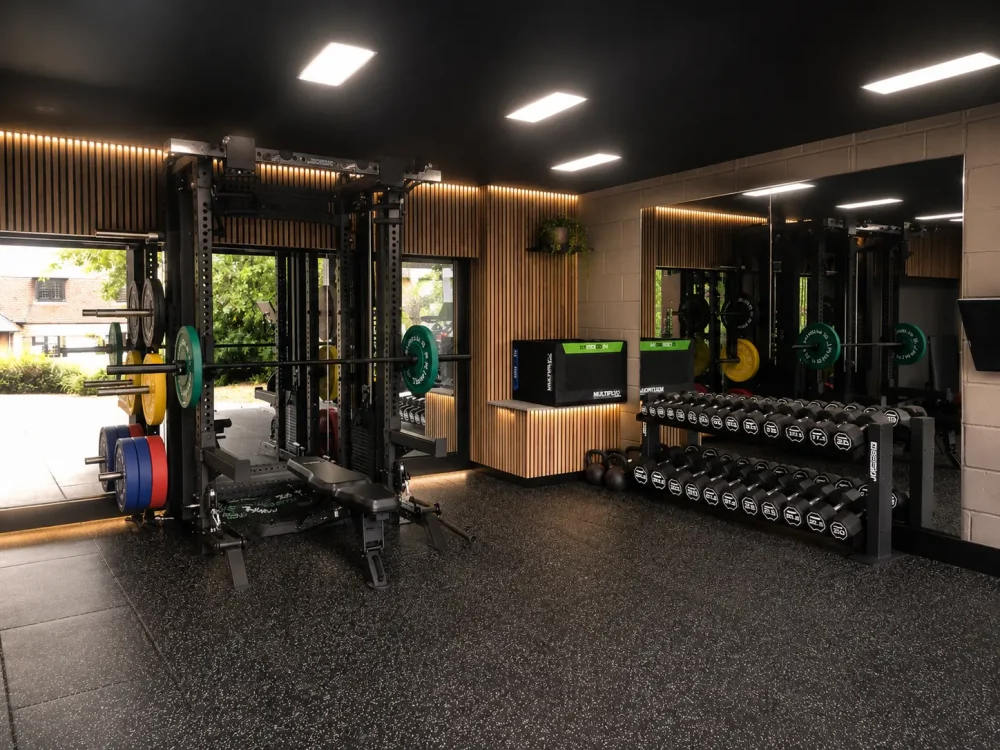
Garage Gym Design: A Popular Choice
One of the most common home gym projects today is converting an existing garage.
A well-planned garage gym design can provide excellent functionality without requiring additional building work.
However, garages often require additional planning for:
- Flooring
- Ventilation
- Lighting
- Ceiling height
- Electrical outlets
- Insulation
Many homeowners focus only on equipment and overlook the environment around it.
The result? A gym that looks impressive but feels uncomfortable to use.
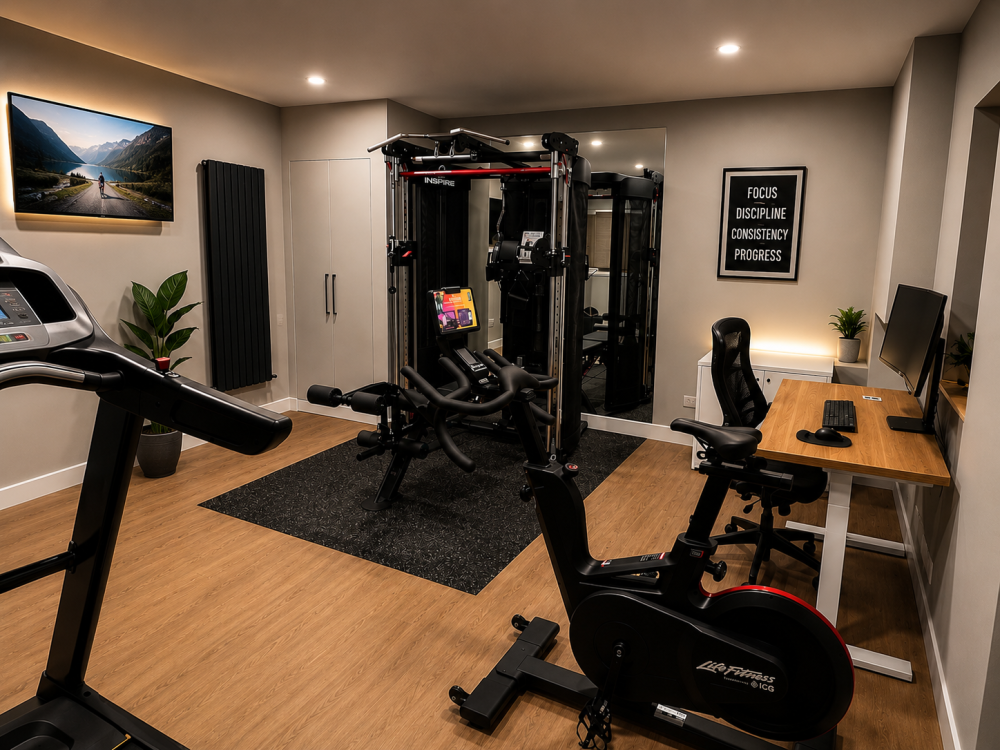
Can a Spare Bedroom Become a Gym?
Absolutely.
A spare bedroom gym can be highly effective when designed correctly.
The key is selecting equipment that suits both the room size and your training needs.
Space-saving options may include:
- Adjustable dumbbells
- Foldable benches
- Wall-mounted storage
- Compact cardio equipment
- Multi-functional training systems
Good design is not about fitting more equipment into a room.
It’s about creating a space that feels open, safe, and enjoyable to use.
Common Home Gym Mistakes to Avoid
Many home gym projects become expensive because planning happens after equipment is purchased.
Here are some common mistakes:
1.Buying equipment before measuring the room
Equipment dimensions rarely tell the full story. You also need space to move safely around it.
2.Ignoring ceiling height
Exercises such as pull-ups, overhead presses, and functional training require vertical clearance.
3.Forgetting storage
Without proper storage, even large gyms can quickly feel cluttered.
4.Overcrowding the room
More equipment doesn’t always create a better gym.
Often, less equipment and a smarter layout create a far better experience.
5.Neglecting flooring and ventilation
These elements significantly affect comfort, safety, and long-term durability.
Why Home Gym Design Matters
The most successful home gyms are not simply filled with equipment.
They are carefully designed around:
- Your goals
- Available space
- Movement flow
- Safety
- Future growth
Whether you’re planning a compact spare room gym or a full garage conversion, thoughtful planning can save money, avoid costly mistakes, and create a gym you’ll actually use every day.
At Gym Design & Supply, we help clients create beautiful, functional gyms that fit their space perfectly—from layout and equipment to flooring, mirrors, and installation.
Because great gyms aren’t measured by size.
They’re measured by how well they work.
Ready to Plan Your Home Gym?
Talk to a gym expert and get started with your tailored gym design.
We help homeowners create spaces that look incredible, perform perfectly, and fit their lifestyle.
Have you started planning your home gym? Tag @gymdesignsupply on Instagram and share your project with us!